URBAN
STORYTELLING
SCHOOL
URBAN
STORY-
TELLING
SCHOOL
ABOUT
Urban Storytelling School is an Erasmus+ partnership program by Center for Social Vision / Sofia and C*SPACE / Berlin. It focuses on urban storytelling as a participatory tool for activating communities, connecting neighbours, and making cities more inclusive. The program is aimed at artists, educators, urban experts, activists, and community leaders, who would like to envision and reshape urban spaces through international learning and hands-on storytelling projects such as interactive walks, experimental guides, interventions, and mapping. Activities include residencies in Berlin and Sofia, mentoring sessions and group project work.
program theme
In Bulgaria, a country with one of the lowest levels of voter turnout in Europe, political scientist Ivan Krastev recently referred to it as a “frozen democracy.” This reflects a broader sense of apathy towards political processes, coupled with low levels of civic engagement, as highlighted by the Index vor Civil Engagement. A pervasive lack of trust also marks Bulgarian society – according to the initiative Vision for SofiaIn the light of this, we began to ask ourselves as to what kinds of relationships, stories, sounds, touches and shared imagination might help us care more.
In Berlin, the constant state of transition and redevelopment poses its own set of challenges. For residents – whether new or “old” Berliners – these rapid changes make it challenging to identify with their surroundings and foster a sense of belonging. The current cultural cuts, political transformations, wars, forced migration, and climate change add layers of uncertainty and pessimism about the future.
When discussing both contexts, we ask: how do we ensure these voices and perspectives, so often marginalized, find a place in the larger urban narrative? How do we weave them into the fabric of a city’s story? We wonder, too, how multiple voices in a city come together to form a collective narrative? And how does an artwork convey this polyphony of voices? Is there a narrative in silence? Can the silence of a summer afternoon speak? What stories do young people tell about the places they love to be? Are they the ones who are most often in streets and squares, inhabiting schoolyards, promising futures?
When we ask about the stories of a city, we also ask: Who is telling the story? How does a city narrate itself? Is it through its people, its living and non-living organisms, its roads, signs, or its history? Can we record the stories that the mosses and grasses tell, and what would they sound like? Can we capture the stories of infrastructure told through the inhabitants of a place? Do neighbourhoods have a shared identity and who knows what it is?
Participants in this program are invited to actively engage in creating these urban narratives, drawing from their ideas about the present and their visions for the future. Through their storytelling projects, they can amplify diverse voices and offer new perspectives on the evolving identities of cities. Topics such as local and global identities, heritage, commemoration culture, gentrification, communication with non-human entities, care, access to public space, and inclusion can serve as starting points for exploration. Participants can discuss and build on their ideas for future or existing projects, with the possibility of developing projects from scratch.
Tools and topics
Program
February 2025
Kick-Off meeting (online)
March 10-15, 2025
Educational and research school in Berlin
March 2025 - July 2025
Online project work
July 2025
Second exchange in Sofia & project presentation
August - October 2025
Publication
October 2025
Presentations in Sofia & Berlin
What We offer
- Mentoring sessions (conducted by Center for Social Vision and C*SPACE)
- Residency in Berlin at C*SPACE (March 2025)
- Public presentation in Sofia within the Nine Elephants festival (July 2025)
- Covering of expenses: Fee and production grant; travel costs (up to 275€), food & accommodation during the exchanges
partners
Center for Social Vision, Sofia, Bulgaria
Center for Social Vision is an idea space and platform fostering exchange of experiences, policies and action towards socially-related art practices. Established in 2021, it brings together curators, artists, researchers, writers, architects and designers to explore the intersections between art and society, looking for opportunities for dialogue and reflection. Since 2022, we publish the online media Journal for Social Vision that is open to research and discussions related to topics of community, environment, urban space and cultural heritage. It is run by the The Blue Cube Foundation and partners with the art space Swimming Pool as well as the festival Nine Elephants, also run by the same organization. www.centerforsocialvision.org
C*SPACE, Berlin, Germany
C*SPACE is a purpose-driven creative space for co-working, projects and events in Berlin-Weißensee. We also initiate cultural and learning programs, co-creating and connecting ideas and encounters across borders. C*SPACE is a hub for social innovation, where global and local neighbors come together across cultural and sectoral boundaries to develop critical awareness and solutions for new forms of regenerative work and learning, as well as celebrate cultural diversity and exchange. C* stands for curiosity, courage, community and collaboration.
www.c-space.eu
project team
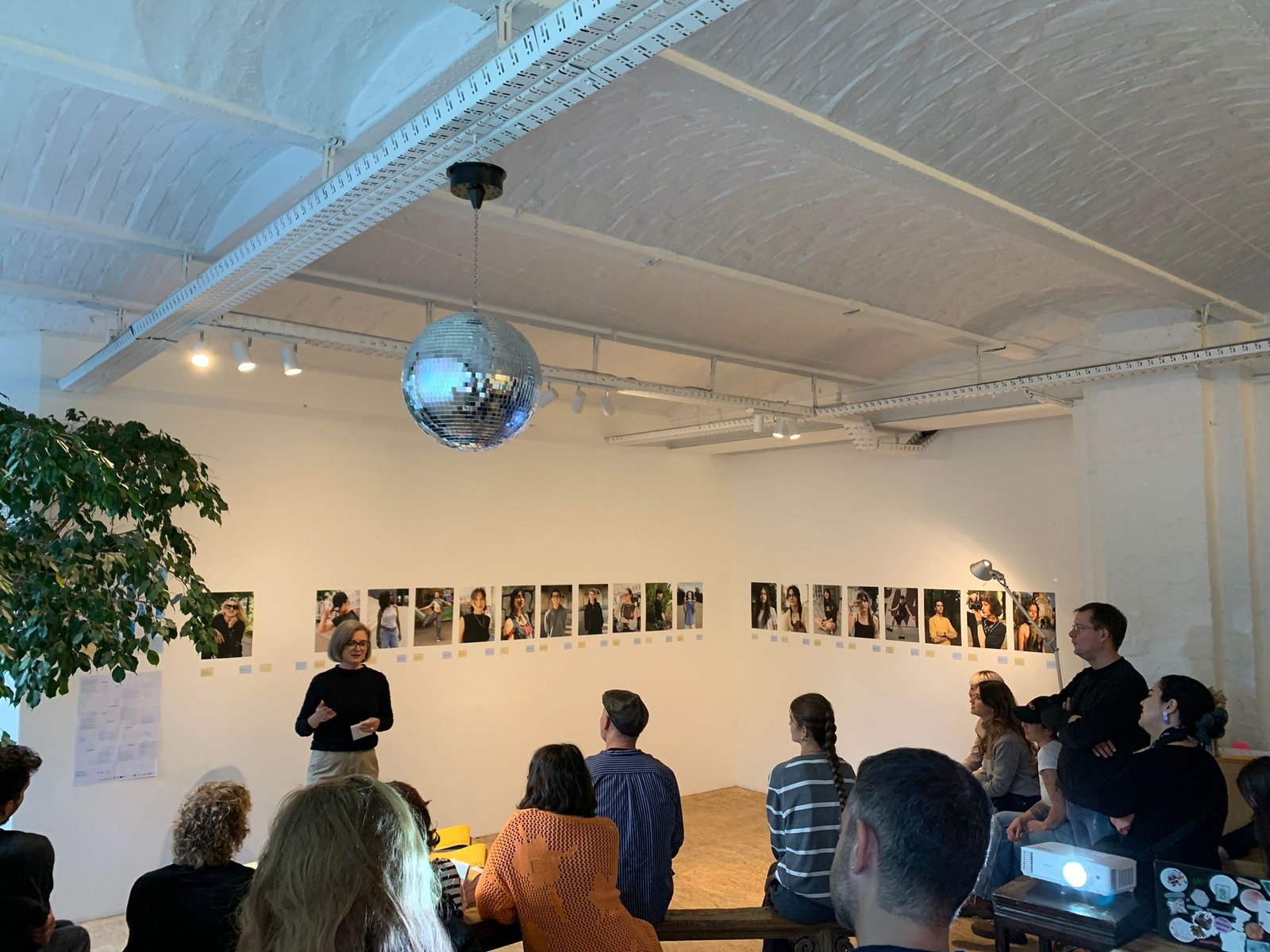
Curator, founder of the art space Swimming Pool and its artistic director, initiator of diverse educational programs and research initiatives, including The Center for Social Vision. Recently, she launched Nine ElephantsViktoria also contributes to cultural policy development through her participation in working groups and committees. Based in Sofia, she holds a PhD in law and legal history.
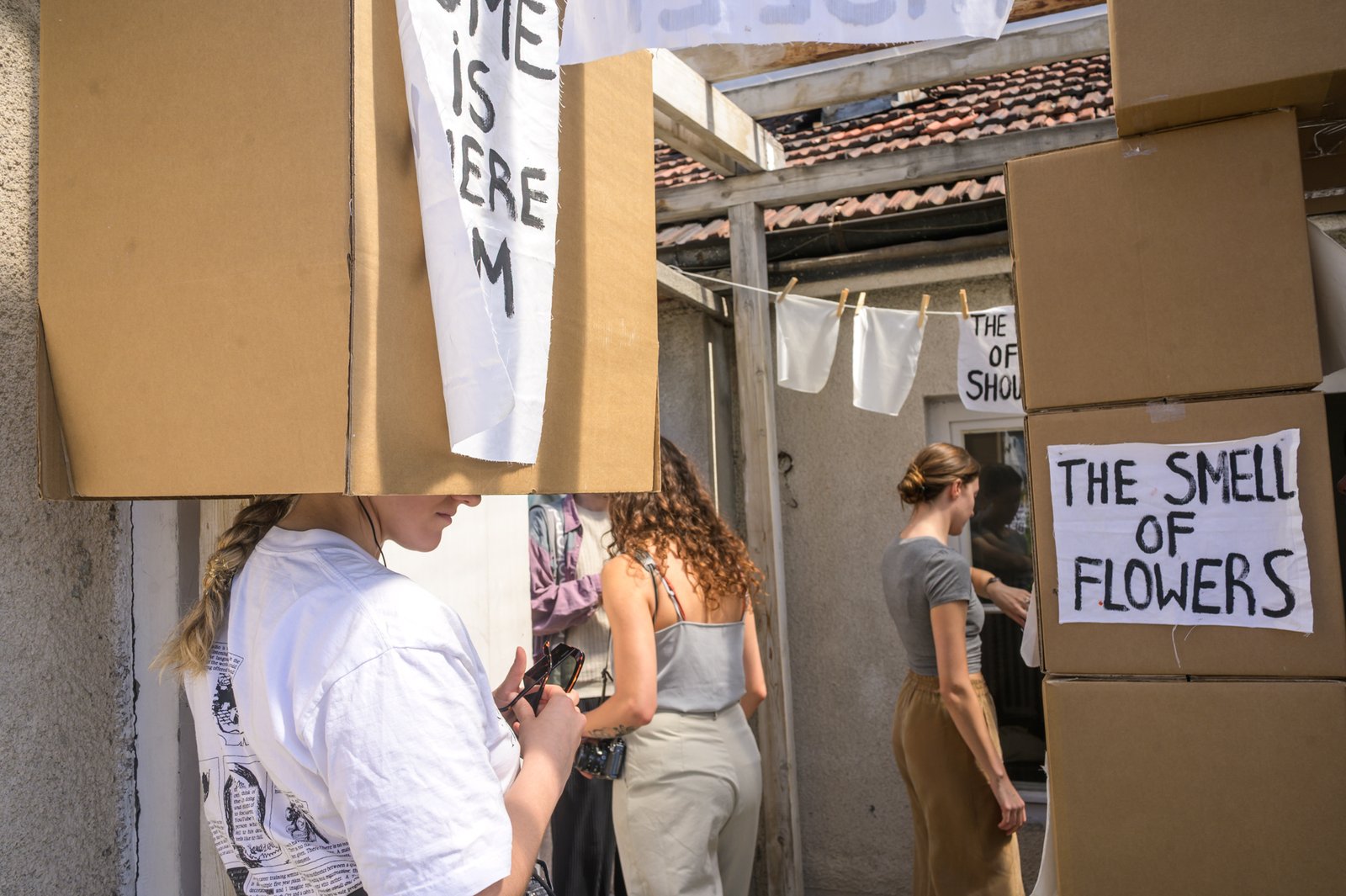
Zehn/Десет explores youth identity, belonging, and imagined futures among young people in Berlin and Sofia, linked through the shared symbol of tram line 10. The team interviewed ten participants in each city and created a passing chain of questions and answers that formed a dialogue across both tram routes. The project culminated in a zine with their portraits, interview excerpts, songs, and this evolving exchange.
The project was first presented in the ‘Imagining Cities’ Symposium within the ‘Nine Elephants’ Festival.
Ksenia Lapina studied literature and social pedagogy, is pursuing an MA in Spatial Strategies at Kunsthochschule Weißensee, and works at the intersection of art and community practice combining photography, text, and textiles.
Maria Fallada Llandrich completed a BA in Arts and Design at Eina University in Barcelona and is pursuing a Master’s in Spatial Strategies at Weißensee Kunsthochschule Berlin, exploring urban spaces, design, and community engagement.
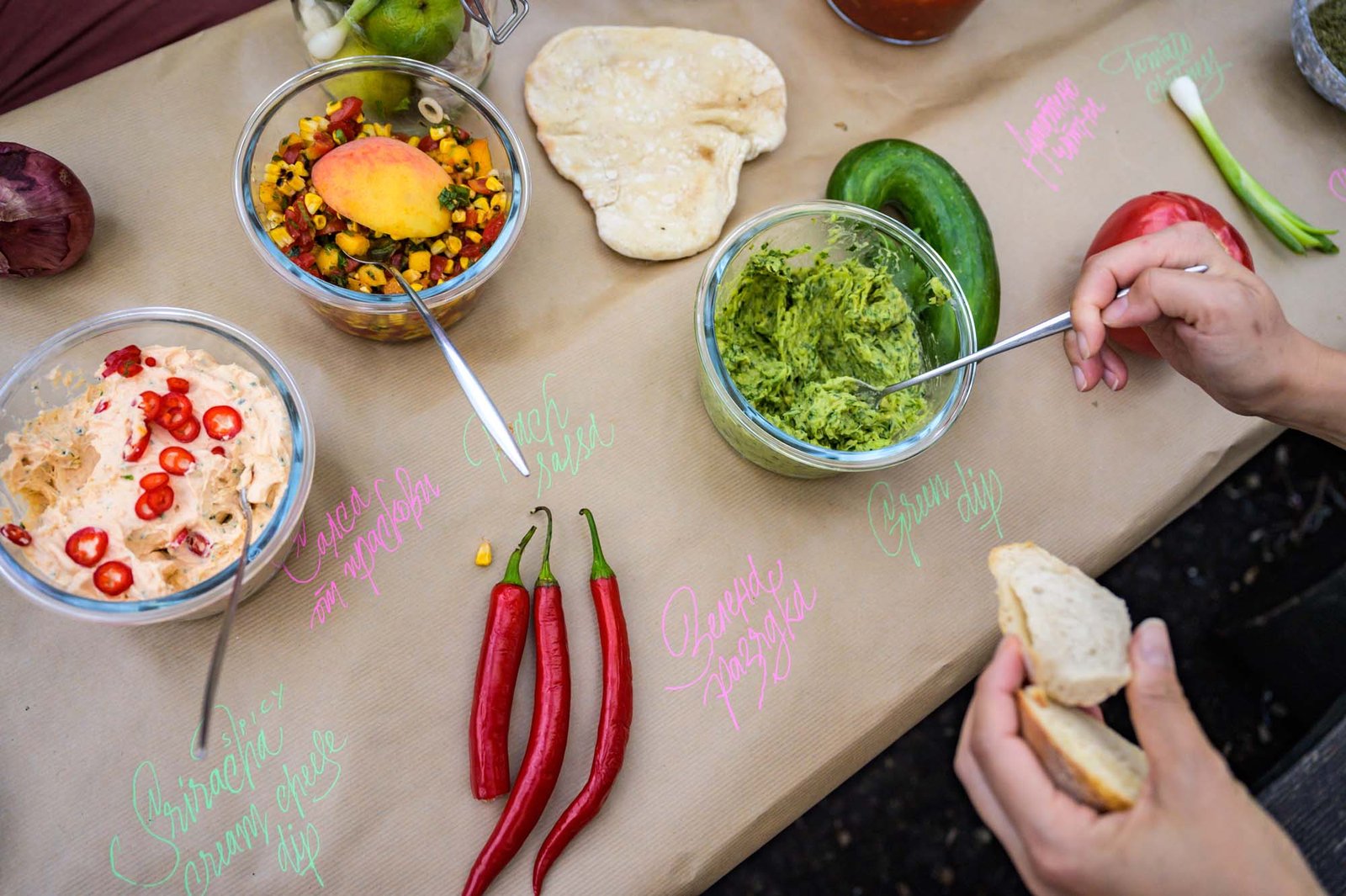
Recipes for the Future” gathers the hopes and ideas of young people along Sofia’s tram No. 10, engaging students from different schools and socioeconomic groups along its route. Through workshops and a survey, their visions were turned into collective “recipes,” compiled in a riso-printed zine and shared at a final picnic in West Park.
Recipes for the Future was presented within the ‘Nine Elephants’ Festival.
More info on the project’s instagram: @recipes.forthefuture
Eleonora Edreva is a transdisciplinary artist, researcher, and educator with a BA in English Literature from the University of Chicago and an MFA in Art & Ecology from the University of New Mexico, working across visual media and socially engaged practices.
Elena Balabanska is an architect and urban designer based in Sofia and Copenhagen, trained in participatory planning and design, with international experience in urban assessments, neighbourhood plans, and exhibition design.
Izabela Markova is a Sofia-based artist and graphic designer working across branding, illustration, event design, and printmaking techniques such as linocut, silkscreen, and risoprinting.
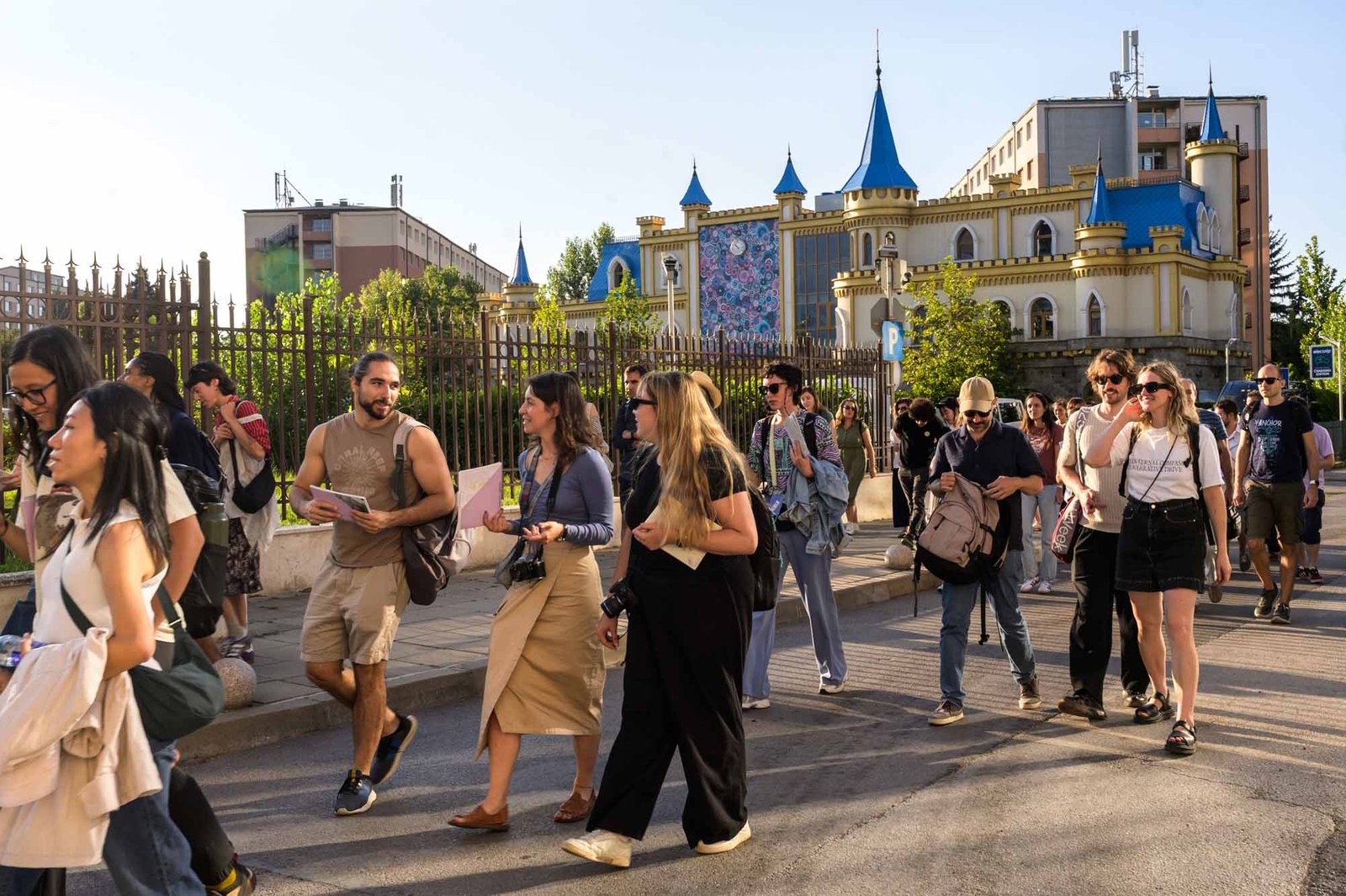
The Shiny Sexy: Heteroptopias in Student Town maps the many faces of Sofia’s Student Town through residents’ stories, questioning whether it remains a student area or has become a multi-generational district. Inspired by the neighbourhood’s vivid, chaotic visual landscape, the project explores its heterotopias – spaces where overlapping functions bring different groups together. An architect, a poet, and a photographer led a guided walk that traced an imaginary map shaped by locals, revealing the district’s hidden places and characters.
The Shiny Sexy: Heteroptopias in Student Town was presented within the ‘Nine Elephants’ Festival.
Asya Petkova is an architect and urbanist with a Master’s from Politecnico di Milano (2024) and a Bachelor’s from the Technical University of Vienna (2022), focusing on space, narrative, local identity, and participatory design.
Ana-Maria Molnar is a photographer based in London and Bulgaria with a BA in Press and Editorial Photography from Falmouth University and training at the VII Photo Academy in Sarajevo, creating long-term documentary projects and theme-based series, influenced by both her international travels and everyday life.
Maria Getova has a background in Cultural Studies and holds a Master’s in Arts and Contemporary Culture (20th–21st Century) from Sofia University. She is a poet, author of critical texts, and cultural manager, and in 2023 published her debut poetry book Half-Life.
project team

Curator, founder of the art space Swimming Pool and its artistic director, initiator of diverse educational programs and research initiatives, including The Center for Social Vision. Recently, she launched Nine Elephants, a festival for art interventions in urban space. Viktoria also contributes to cultural policy development through her participation in working groups and committees. Based in Sofia, she holds a PhD in law and legal history.

Berlin-based interdisciplinary designer, C*SPACE program & communications manager, and co-founder of re:imagine your city network. She has got over 13 years of experience in nonprofit and socio-cultural management with focus of participatory creative approaches, urban transformation, audio storytelling, food practices, and rituals of remembrance. Katya holds degrees in Language Teaching and Visual Communications, and is currently pursuing a Master’s in Public Design.

Co-founder of C*SPACE and program curator, Katja has been active for 20 years as an intermediary actor in transcultural cooperation at the intersection of economy, society, and culture. She is a trained process facilitator trained with the Presencing Institute @MIT and certified by the GFI – Generative Facilitation Institute Berlin, and a passionate curator of creative and cultural projects.

Fluid theatre maker & Facilitator. Born in Siberia/Russia, based in Berlin. Queer feminist migrant artist. Creates theatre and art projects using methods of Game Design, Theatre of the Oppressed, participatory, documentary and site-specific theatre. Her participatory performances she co-makes with local communities and diverse groups of citizens. She sees participatory art as a tool to deconstruct the system and rehearse the change.
publication
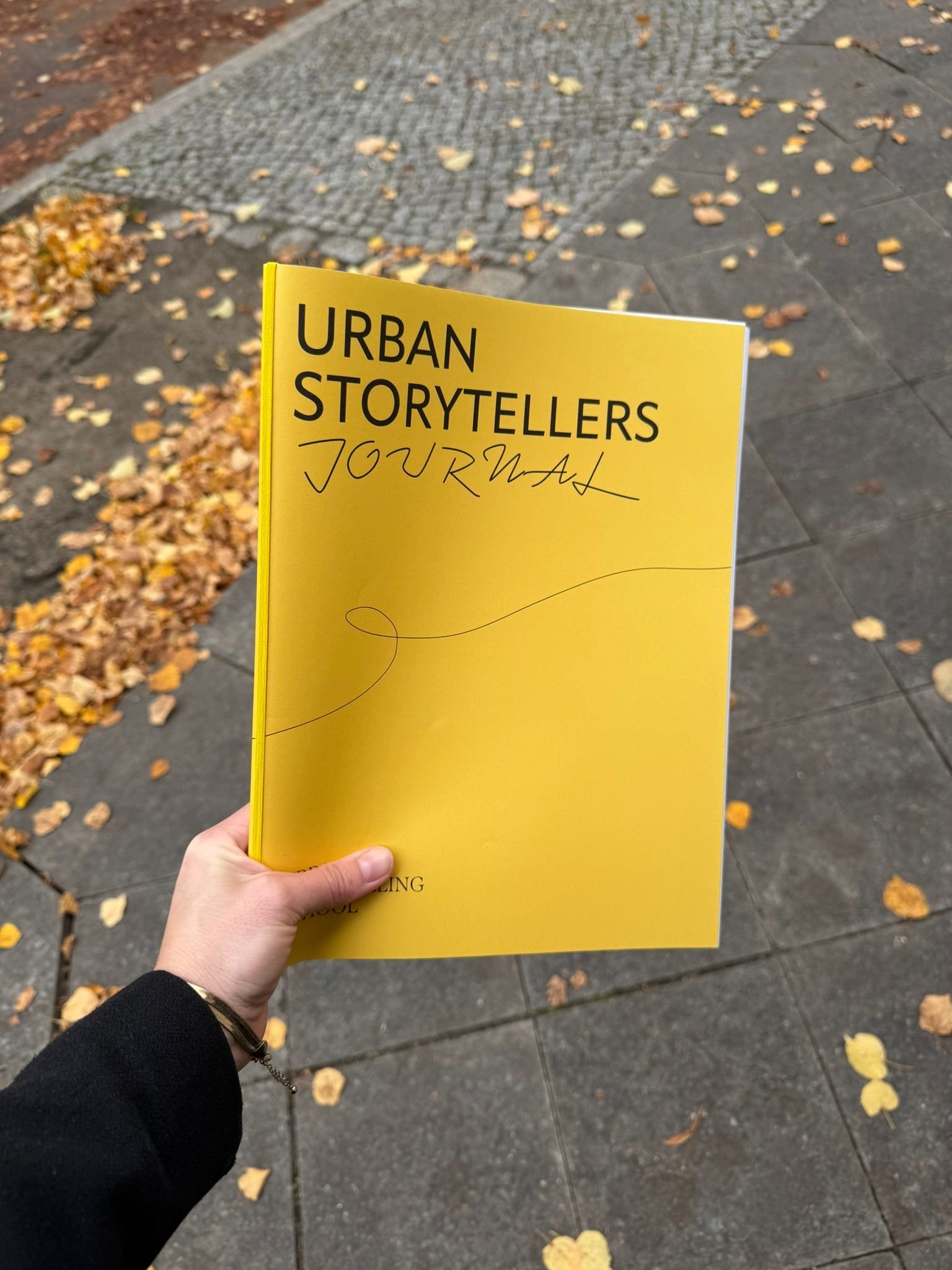
We’re happy to share the Urban Storytellers Journal – a collective publication bringing together the voices, reflections, and projects developed within the Urban Storytelling School. Part travel diary, part shared notebook, the journal traces a year of exchange between Sofia and Berlin – of walking, mapping, storytelling, and reimagining urban life. Inside, you’ll find project documentations, interviews, and discussions on topics such as public space, participation, care, identity, memory, and collective imagination – all shaped by the perspectives of young cultural practitioners.
The publication is the result of the contributions of the participants and collaborators, a.o. Desislava Haak, Britta Kaufhold, Vladya Mihailova, Viktor Damov, Dimitar Nikolov, a.o. The Journal is designed by Crunchy Oyster.
We have a limited number of print copies, so write us to reserve yours. We would love to hear your thoughts and reflections on the publication, so feel free to share any feedback with us.
The conversations and reflections, featured in the journal are shared on Journal for Social Vision and CITYMAKERS.
Apply
Who can apply
12 participants based either in Bulgaria or in Germany who would like to learn to use storytelling methods for community engagement and social cohesion.
The following criteria are relevant for the selection process:
- Strong interest in using creative storytelling methods to explore cities and their potential futures and a potential project idea/theme
- Readiness to take part in all the project activities and willingness to develop a bilateral audio project
- Age: 18+
- Participants should be based in Germany or Bulgaria
- Language: English, so the minimum expected proficiency is B2, based on self-evaluation.
Particular attention will be paid to the educational and professional interests of the applicants, in order to ensure an interdisciplinary approach and include diverse backgrounds. No previous experience with working on audio projects is needed. The applications are evaluated and considered to the same extent in a non-discriminatory manner.
Results will be communicated to all the applicants through email by January 16, 2024.
Submission opens
December 20, 2024
Submission closes
January 16, 2025, 23:59 CET
Results
January 26, 2025
Contact
The project is supported by the National Agency for Education for Europe at the Federal Institute for Vocational Education and implemented within the EU Program Erasmus +.
With the financial support of the Bulgarian Culture Fund.
Organised by:


Funded by: